Nobody Cracks Open a Programming Book Anymore
A sad look at the state of modern programming books.
| Written | Monday, May 25, 2026 |
|---|---|
| By | Cyrus Lopez |
| Length | 00873 words, about 5 minutes |
There was, for a long time, a wall.
If you walked into a book store, past the magazines and the cookbooks, you’d arrive at the computer section, and along one wall there was a stretch of books with cartoon animals on their covers. A rhino for JavaScript. A camel for Perl. A python (obviously) for Python. And whatever this was:
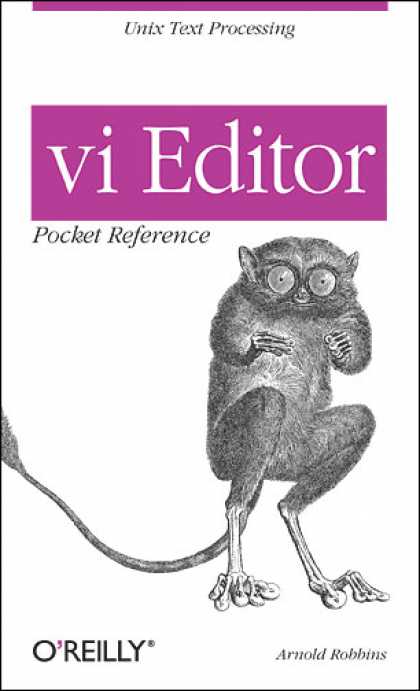
They were thick, they cost about $50, and they had titles like “Learning React” and “HTTP: The Definitive Guide”. If you wanted to learn how to do a thing on a computer, you bought one of these, took it home, and opened it up next to your computer and typed what it said until the thing worked.
That wall is smaller now. If it’s even still there. In some stores the wall is gone and relegated to a small rack that has six books on it, three of which are about ChatGPT.
Through the first nine months of 2023, sales in the “computer book” category at Circana BookScan (the industry’s standard tracker, which costs roughly the price of a small used car to subscribe to) were down 16.9% year over year. Publishers Weekly, which had been dutifully reporting these figures in its quarterly narrative summaries, kept doing so right up through that 16.9% figure, and then in 2024 and 2025 simply stopped mentioning the category by name.
To be clear, books in general are doing fine. Total U.S. print sales reached 762.4 million units in 2025, up 0.3% over 2024, which was itself up 0.5% over 2023. The category that is in trouble is the part of it that teaches you how to make software. The American Association of Publishers’ “professional books” segment, which is the rough corporate proxy for “books your employer might buy you,” fell 22.3% in August 2025.
The book industry is fine but the technical end is bleeding out.
Quickly and quietly. There was no Napster moment for the programming book. Nobody filed a lawsuit. The publishers did not, as far as I can tell, even hold a press conference. We simply found one day that they stopped reporting the category itself. The category doesn’t die, it just stops being talked about.
You already know why, more or less. ChatGPT has over 900 million monthly active users. GitHub Copilot has 4.7 million paying subscribers as of January 2026, up roughly 75% in a year. You can’t imagine writing software without Claude Code anymore.
Stack Overflow is receiving about 3,800 questions a month, which is what it was getting in 2008, before it had finished being launched. The chatbots have eaten the demand for the kinds of answers that programming books used to provide.
The programming book was, when you look at it squarely, always a slightly absurd object. Printed text on bound paper, describing software that lived on screens, which the reader had to retype, by hand, into a screen of their own. I loved doing this and they remain some of my very fondest childhood memories. But the medium was wrong for the content. People put up with it because there was no better way to get a careful sustained explanation of a technical thing into one person’s head from another person’s.
What the book was good at, despite being the wrong format, was forcing both the writer and the reader to be slow. You cannot fake your way through 400 pages. It took a certain discipline to get through.
The chatbot does not have this discipline. The chatbot has read every book and forgotten the point of every one of them. It will explain idempotency in the precise number of words you require, and you will close the tab, and you will not remember what it told you, because you did not type it.
That last sentence is the whole thing. Knowledge, for working programmers, was always the residue of typing. Of doing. The typing was the practice! What is going away is the typing.
Which, on balance, may be fine. I don’t know. People used to lose weekends to installing Linux from a stack of floppies and struggling with WinModems, and nobody pretends that was character-building (though I now consider them fond memories too). Tools get easier. Skills shift. The kid who is right now learning to code by chatting with an agent is not a worse programmer than I was at 12, hunched over Learning Perl, retyping examples that would not run because I missed a semicolon.
That kid is a different programmer. They are, in some ways I don’t fully understand, working at a higher level of abstraction than I ever did at that age, and the things they will build with that abstraction will surprise me.
But somewhere in a used bookstore in San Francisco or Seattle or wherever used bookstores still exist, there is a 1997 edition of Learning Perl. It smells faintly of basement. Someone wrote their name in the front of it in pencil. There is a furiously underlined sentence in chapter 7 about regular expressions that was made in anger. On page 112 there are coffee stains where the caffeine blots are somehow still a valid Perl program.
The book costs three dollars. Nobody is going to buy it.